
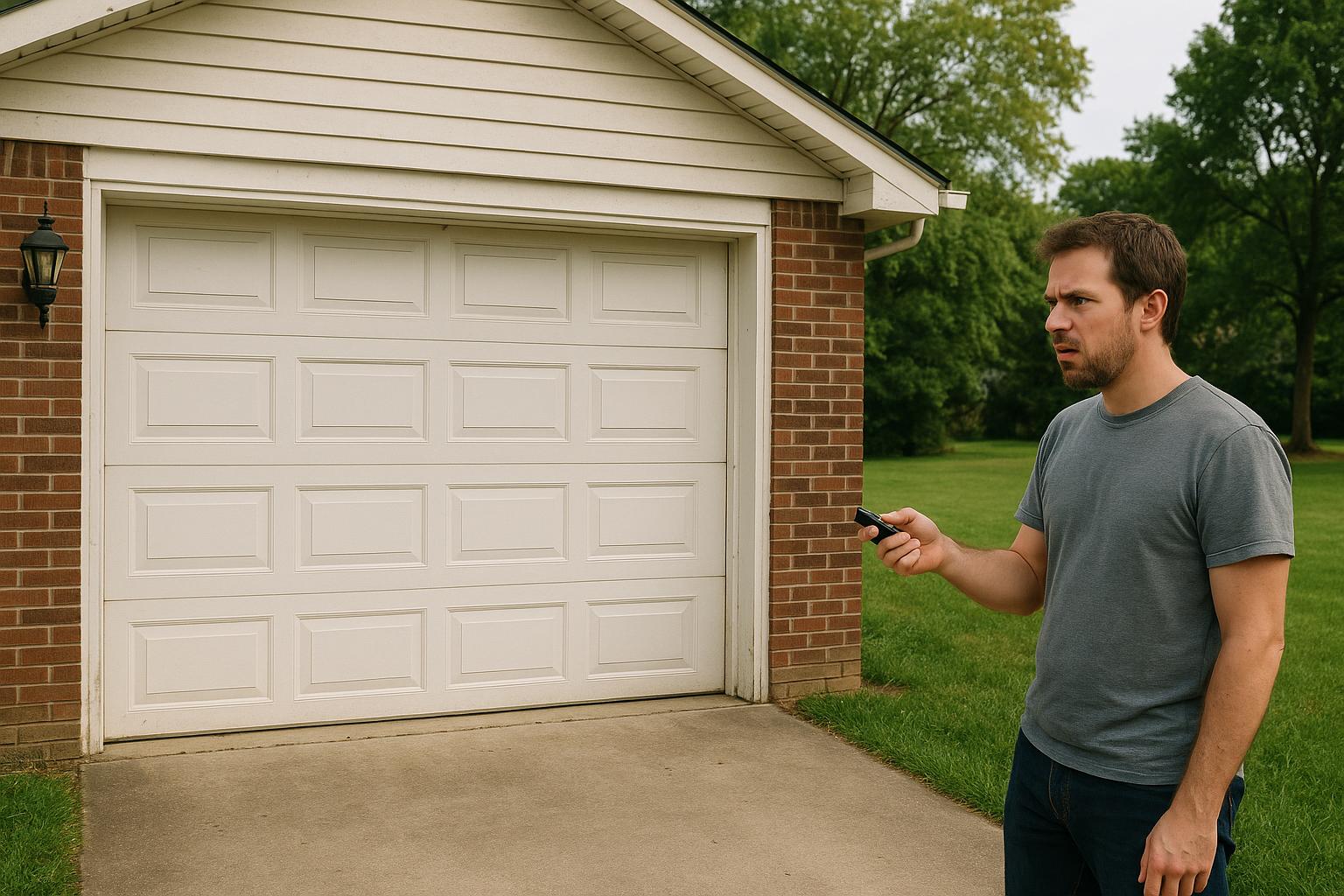
When Your Garage Door Refuses to Cooperate
You press the button on your garage door opener and nothing happens. Or maybe the door starts to move and then reverses. Few things are more frustrating than a garage door that won't open or close, especially when you're trying to get to work in the morning or secure your home at night.
For homeowners in Lawrenceburg, a malfunctioning garage door isn't just an inconvenience — it can be a security risk and a safety hazard. Your garage door is likely the largest moving part of your home, and when it stops working, you need answers fast.
Before you panic, many of the most common causes of a stuck garage door are things you can check yourself. In this guide, we'll walk you through the most likely culprits and help you determine whether it's a quick fix or something that requires professional repair.
Check the Obvious Things First
It might sound too simple, but the first step is to rule out the basics. You'd be surprised how often the solution is something straightforward.
- Dead remote batteries: If your wall-mounted button works but your remote doesn't, try replacing the batteries in your remote or keypad. This is the single most common reason people think their garage door is broken.
- Power supply: Make sure the garage door opener is plugged in. Check your circuit breaker or fuse box to see if the circuit has tripped. Power outages and surges are common in Anderson County, especially during storm season.
- The lock switch: Many garage door openers have a lock button on the wall-mounted control panel. If this has been accidentally engaged, the remote won't work, though the wall button still will.
Inspect the Safety Sensors
If your garage door starts to close but immediately reverses, the problem is almost always related to the photo-eye safety sensors. These are the small sensors mounted on either side of your garage door near the floor.
What to Look For
- Obstructions: Remove anything that might be blocking the sensor's beam — boxes, tools, bikes, even cobwebs can interfere with the signal.
- Alignment: If one of the sensors has been bumped, the two units may no longer be pointing directly at each other. Most sensors have a small LED light that glows steady green when properly aligned and blinks when they're out of alignment.
- Dirty lenses: Wipe the sensor lenses with a soft cloth. Dust, dirt, and moisture can accumulate over time and block the infrared beam.
Safety sensors are a federal requirement on all garage door openers manufactured after 1993. They're designed to prevent the door from closing on a person, pet, or object. If yours aren't working properly, it's important to get them fixed rather than bypassing them.
Look at the Tracks and Rollers
Your garage door moves along metal tracks on either side of the opening. If these tracks become bent, misaligned, or obstructed, the door can get stuck or move unevenly.
- Visual inspection: Look along the length of both tracks for any visible bends, dents, or gaps between the track and the rollers.
- Debris: Check for rocks, leaves, or other debris that may have gotten into the tracks. This is especially common in Lawrenceburg during the fall when leaves blow into garages.
- Lubrication: Dry or corroded rollers can cause the door to bind. A silicone-based garage door lubricant applied to the rollers, hinges, and tracks can sometimes solve the problem.
If you notice a significantly bent track, don't try to force the door open or closed. This can cause further damage and potentially make the door fall off the track entirely.
The Disconnect Switch May Be Engaged
Every garage door opener has a manual disconnect feature, usually a red cord or handle hanging from the opener rail. This is designed to let you operate the door manually during a power outage. If it's been pulled, your opener motor will run but the door won't move because the trolley is disconnected from the drive mechanism.
To re-engage it, simply pull the cord back toward the opener and then activate the opener with your remote or wall button. The trolley should reconnect automatically.
When the Problem Is More Serious
If you've checked all of the above and your garage door still won't budge, the issue likely involves a component that requires professional attention.
Broken Springs
Garage door springs bear the full weight of the door. When a spring breaks, the opener usually doesn't have enough power to lift the door on its own. Signs of a broken spring include a loud bang from the garage, a door that feels extremely heavy when you try to lift it manually, or a visible gap in the torsion spring above the door.
Do not attempt to replace garage door springs yourself. These components are under extreme tension and can cause serious injury if handled improperly.
Stripped Gears in the Opener
If you hear the motor running but the door doesn't move and the disconnect isn't engaged, the internal gears in your opener may be stripped. This is common in older openers and usually means the gear-and-sprocket assembly needs to be replaced.
Broken Cables
The lift cables work in conjunction with the springs to raise and lower your door. A snapped cable can cause the door to hang at an angle or refuse to move. Like springs, cable repair should always be handled by a trained technician.
How to Handle an Emergency Situation
If your garage door is stuck open and you can't secure your home, or if it's stuck closed and your car is trapped inside, you need help quickly. At Lawrenceburg Garage Door, we offer emergency garage door service for exactly these situations. A stuck door doesn't wait for business hours, and neither do we.
In the meantime, if the door is stuck partially open, do not walk or stand under it. A door that's off-track or has a broken spring can drop unexpectedly.
Preventing Future Problems
The best way to avoid getting stuck with a garage door that won't work is regular maintenance. A few simple habits can go a long way:
- Lubricate moving parts every six months with a garage door-specific lubricant.
- Test the balance of your door by disconnecting the opener and lifting the door manually to the halfway point. It should stay in place. If it falls or rises, the springs may need adjustment.
- Test the auto-reverse feature monthly by placing a board or roll of paper towels under the door. If the door doesn't reverse upon contact, the safety system needs attention.
- Schedule annual professional maintenance to catch worn parts before they fail completely.
When in Doubt, Call a Professional
Some garage door issues are simple enough to handle on your own, but many involve components that are dangerous to work with or require specialized tools. If you're a homeowner in Lawrenceburg, Versailles, Frankfort, or anywhere in the surrounding area and your garage door won't cooperate, Lawrenceburg Garage Door is here to help. We'll diagnose the problem, explain your options, and get your door working safely again.
Don't let a stuck garage door disrupt your day or compromise your home's security. Give us a call and let our experienced technicians take care of it.